The Vijaysar Tree (Pterocarpus marsupium): Where It Grows, What It Looks Like and Why Its Wood Is Used
Most people meet Vijaysar as a wooden tumbler or a name on a bottle. Fewer know the tree behind it. The Vijaysar tree, Pterocarpus marsupium, has a long history in Indian traditional medicine, and understanding it helps you make sense of why genuine Vijaysar wood is limited, why it costs what it does, and why it’s often imitated.
What Is the Vijaysar Tree (Indian Kino) ?
Pterocarpus marsupium is a medium-to-large deciduous tree, meaning it sheds its leaves seasonally. It can grow up to around 30 metres tall. It belongs to the legume family, Fabaceae, the same broad family as peas and beans.
It’s known by several names:
- Vijaysar and Bijasar, the names used in Hindi and Ayurveda
- Indian kino and Malabar kino, the common English names
- Pterocarpus marsupium Roxb., the botanical name
- Explore an Authentic Vijaysar Wood Glass from Madhufit.in →
Where Does It Grow?
The tree is native to India, Nepal and Sri Lanka. In India it occurs in parts of the Western Ghats in the Karnataka and Kerala region and in the forests of Central India. It grows in dry deciduous and mixed forests.
How to Recognise It
Features commonly described for the tree include:
- A tall, straight trunk with rough, fissured bark
- Compound leaves made of several leaflets
- Clusters of small yellow flowers
- Flat, winged seed pods that carry a single seed
- A dark red resin, called kino, that seeps from cuts in the bark
Identifying a tree properly takes an expert, and you can’t reliably identify it from a description alone. If you’re trying to confirm a specimen, a local forest department or botanist is the right person to ask.
Explore an Authentic Vijaysar Wood Glass from Madhufit.in →
The Heartwood: The Part Used in Wood Glasses
A tree trunk has an outer layer, the sapwood, and a darker, denser core called the heartwood. Vijaysar wood glasses are carved from the heartwood, which is the part traditionally used in Ayurveda. When water rests in a genuine heartwood tumbler, it gradually takes on a golden-brown tint over several hours.
Because heartwood is only found in mature trees, supply depends on trees that have grown for many years. That’s one reason genuine heartwood isn’t cheap, and why very low prices are a warning sign.
Conservation: A Tree Under Pressure
Pterocarpus marsupium is listed as Near Threatened on the IUCN Red List. Over-exploitation for timber and medicinal use, illegal harvesting and habitat loss have contributed to its decline. This is why sourcing is a fair question to ask any seller. Our guide to whether Vijaysar wood glasses are sustainable covers what to ask.
Don’t Confuse It With Other Pterocarpus Species
Pterocarpus is a genus with several species, including red sandalwood (Pterocarpus santalinus), which is a different tree. Listings sometimes blur names or use “Pterocarpus” loosely. A genuine Vijaysar listing should name Pterocarpus marsupium specifically.
A Note on the Wood Itself
The wood contains a range of natural compounds. One of them, found in lab studies, can irritate skin, eyes and airways, which is one reason people who work raw wood take care with dust. For a finished tumbler, the sensible steps are the ones we recommend anyway: rinse a new glass with plain water before first use, and stop using it and speak to a doctor if you notice skin irritation or other reactions.
Traditional Use, Not Proven Treatment
In Ayurveda, Vijaysar is traditionally associated with blood sugar support. That’s a tradition, and research on the tree’s compounds is mostly early-stage, with limited human evidence for wooden tumblers specifically. If you take diabetes medication, talk to your doctor before using a Vijaysar wood glass, and never change a prescribed medicine because of it.
From Tree to Tumbler
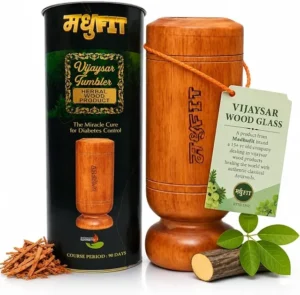
A wood glass starts as heartwood from a mature tree and is carved, sanded and finished. What matters to you as a buyer is that it’s genuine Pterocarpus marsupium heartwood from a seller who can explain where it came from. You can find the MADHUFIT Vijaysar Herbal Tumbler on madhufit.in and vijaysar.in.
Explore an Authentic Vijaysar Wood Glass from Madhufit.in →
Frequently Asked Questions
What is the botanical name of Vijaysar? Pterocarpus marsupium Roxb.
Where does the Vijaysar tree grow? In India, Nepal and Sri Lanka, including parts of the Western Ghats and the forests of Central India.
Is Vijaysar an endangered tree? It’s listed as Near Threatened by the IUCN, meaning its numbers are declining.
What is Indian kino? It’s another name for the Vijaysar tree, and kino also refers to the red resin it produces.
Which part of the tree is used in wood glasses? The heartwood, the dense inner core of mature trunks.
Is red sandalwood the same as Vijaysar? No. Red sandalwood is Pterocarpus santalinus, a different species.
Target Keywords
vijaysar tree vijaysar plant vijaysar tree images pterocarpus marsupium tree indian kino tree malabar kino tree vijaysar tree where found bijasar tree vijaysar tree in hindi vijaysar botanical name
Explore an Authentic Vijaysar Wood Glass from Madhufit.in →