Vijaysar Wood Glass vs Jamun, Karela and Methi: How Traditional Remedies Compare
Anyone looking into traditional Indian approaches to blood sugar support usually runs into the same short list: Vijaysar, jamun, karela, and methi. They’re often mentioned together, which makes them sound interchangeable. They aren’t. They differ a lot in how you take them, how easy they are to keep up, and what’s actually known about each. Here’s an honest side-by-side.
A Quick Note Before the Comparison
All four are traditional practices. None is a replacement for prescribed medication, and the strength of research behind each one varies. This comparison is about how they fit into daily life, not about declaring a winner on effectiveness, because the evidence doesn’t support doing that.
The Four at a Glance
Vijaysar wood glass A wooden tumbler filled with water and left for several hours, then drunk. There is nothing to measure, cook, or swallow. The effort is almost entirely in remembering to fill it at night.
Jamun (seed powder or fruit) Jamun is the Indian blackberry. The seeds are dried and powdered, then taken with water. It’s seasonal as a fruit, and the powder has a strong, astringent taste that some people find hard to keep up.
Karela (bitter gourd) Eaten as a vegetable or drunk as juice. It’s widely available and familiar, but the bitterness is the main reason people drop the habit. Juice also needs fresh preparation.
Methi (fenugreek seeds) Seeds soaked overnight, then the water is drunk and the seeds are sometimes chewed. It’s cheap and easy to find, and the soak-overnight routine is similar to the wood glass in effort.
How They Actually Differ in Daily Life
- Taste: The wood glass is the mildest, since it only tints the water. Karela and jamun powder are the hardest on the palate.
- Prep effort: The wood glass and methi both work on an overnight-soak routine. Karela juice needs fresh preparation. Jamun powder needs measuring.
- Consistency over months: Habits that are pleasant tend to survive. Those that are unpleasant tend not to, which matters more than any small difference between them.
- Cost pattern: Methi and karela are cheap and consumable. Jamun powder is a repeat purchase. A wood glass is a single purchase that lasts a usable window of roughly 60 to 90 days.
Can You Combine Them?
People often do, but this is exactly where caution matters. Each of these is traditionally associated with blood sugar support, so stacking several together, especially on top of prescribed diabetes medication, increases the chance of an additive effect that could push blood sugar lower than intended. If you’re on medication, tell your doctor about everything you’re adding, not just one item, and add them one at a time rather than all at once so you can tell what’s doing what.
Choosing One to Start With
If you’re starting out, pick the one you’ll realistically keep doing. For many people, that’s the one with the least friction. That’s why we built around the wood glass format: the MADHUFIT Vijaysar Herbal Tumbler asks for one small step the night before, with no taste to push through. You can find it on madhufit.in and vijaysar.in.
Explore an Authentic Vijaysar Wood Glass from Madhufit.in → 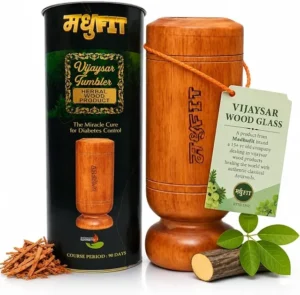
Frequently Asked Questions
Which one is the most effective? There’s no strong head-to-head research to rank them, so any claim that one clearly beats the others isn’t well supported.
Can I use Vijaysar and methi water together? People do, but if you’re on diabetes medication, check with your doctor first, since both are associated with blood sugar support.
Is a wood glass easier to keep up than karela juice? For most people, yes, mainly because there’s no taste to manage and no daily prep beyond filling the glass.