Vijaysar: The Definitive Ayurvedic Heritage Guide to the Indian Kino Wood Glass
You have probably seen Vijaysar wood glasses, powders, and capsules promoted for blood-sugar wellness. What those claims often miss is the rich Ayurvedic heritage behind this revered heartwood—and the difference between a meaningful traditional ritual and a promise of a cure. In this guide, we’ll explore Vijaysar’s classical identity, traditional uses, wood-glass preparation, product choices, and safe ways to make it part of your wellness routine.
Explore an Authentic Vijaysar Wood Glass from Madhufit.in →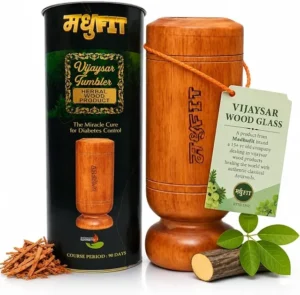
Key Takeaways
- Vijaysar is the Ayurvedic name for Pterocarpus marsupium, also known as the Indian kino tree.
- Ayurvedic heritage values Vijaysar heartwood for supporting balanced Kapha, metabolism, and traditional Prameha care.
- Vijaysar wood glasses preserve a simple, time-honoured ritual of soaking water in heartwood overnight.
- Traditional use is meaningful cultural knowledge, but it does not make Vijaysar a replacement for prescribed diabetes care.
- Authenticity depends on verified heartwood, transparent sourcing, and a well-crafted, untreated wood glass.
- Medical guidance remains important for people using diabetes medicines or managing chronic health conditions.
What Is Vijaysar and What Is Its Botanical Name?
Vijaysar is the Ayurvedic name for Pterocarpus marsupium, a medicinal tree also known as Indian kino or Malabar kino. In Hindi, it is often called Bijasar, while Sanskrit Ayurvedic literature commonly refers to it as Asana and Bijaka.
First, Vijaysar is treasured primarily for its dense, reddish heartwood. For example, when water rests in a genuine Vijaysar wood glass, it may slowly take on a warm amber or reddish-brown hue—a familiar sign in many traditional Indian homes.
Moreover, Vijaysar is more than a trending wellness ingredient. Vijaysar represents a living Ayurvedic heritage that connects plant knowledge, daily routine, and mindful self-care. The tree’s heartwood, bark, gum, flowers, and leaves have all appeared in regional traditional practices, although heartwood remains the best-known form for household use.
For more context on Ayurvedic principles, see [Internal link: “Ayurveda for beginners” → introductory Ayurveda guide].
Why Does Vijaysar Matter in Ayurveda?
Vijaysar matters in Ayurveda because it has long been associated with metabolic balance, Kapha support, and traditional Prameha care. Its use is rooted in a holistic worldview that looks at food, routine, digestion, sleep, movement, and herbs together.
First, classical Ayurveda describes Vijaysar as having Kashaya (astringent) and Tikta (bitter) taste qualities. For example, these qualities traditionally place the herb within preparations intended to support balance where heaviness, excess Kapha, or metabolic sluggishness are present.
Second, Vijaysar is described as Laghu and Ruksha—light and dry in Ayurvedic terminology. These qualities are traditionally associated with helping counter an overly heavy or sluggish constitution, especially when used under the guidance of a qualified practitioner.
| Ayurvedic attribute | Traditional meaning | Everyday wellness context |
|---|---|---|
| Rasa | Astringent and bitter | Often associated with balancing heavy, sweet, or rich dietary patterns |
| Virya | Cooling potency | Traditionally used in formulas intended to calm excess heat and imbalance |
| Dosha action | Pacifies Kapha and Pitta | Supports an Ayurveda-informed wellness routine |
| Primary part used | Heartwood | Used in Vijaysar wood glasses and traditional preparations |
At the same time, Ayurveda never treats one herb as the whole answer. A traditional herb works best as part of a thoughtful routine, not as a shortcut around diet, movement, sleep, or medical care.
What Are the Traditional Ayurvedic Uses of Vijaysar?
Vijaysar is traditionally used in Ayurveda for Prameha, metabolic wellness, skin-support formulations, and long-term rejuvenative routines. The herb appears in Ayurvedic discussions of Madhumeha, a classical term often compared with diabetes, but the traditional concept is broader than a modern diagnosis.
Vijaysar for Prameha and Madhumeha
First, Vijaysar has been described in Ayurvedic tradition as Pramehahara, meaning it is used in formulations for Prameha. For example, Ayurvedic practitioners may combine Vijaysar with dietary guidance, daily movement, and other herbs rather than relying on the herb alone.
Moreover, the term Madhumeha should not be used to make casual treatment claims. Vijaysar has a history of traditional use for metabolic wellness, but it is not an established replacement for prescribed diabetes treatment.
Vijaysar for Kapha and Metabolic Heaviness
Second, Vijaysar is traditionally associated with Kapha-Medohara support. For example, Ayurveda may use this language when discussing a tendency toward heaviness, excess body fat, sluggish digestion, or low energy.
That being said, modern weight management requires an individual plan. A Vijaysar wood-glass ritual can complement mindful habits, but it cannot replace adequate nutrition, regular movement, and professional care where needed.
Vijaysar in Skin and Rejuvenative Traditions
Finally, Vijaysar has also appeared in traditional formulations for skin concerns, itching, and long-term vitality. For example, its role in classical formulations reflects Ayurveda’s wider goal of maintaining resilience rather than focusing only on one symptom.
Can Vijaysar Help Support Healthy Blood Sugar Levels?
Vijaysar may be used as a traditional wellness support for healthy blood-sugar routines, but it should not be presented as a cure for diabetes. Responsible use means respecting both Ayurvedic heritage and modern medical guidance.
First, diabetes is an important concern for Indian families. An estimated 89.8 million adults in India aged 20–79 were living with diabetes in 2024 — Source: International Diabetes Federation, 2025.
Moreover, an estimated 43% of people with diabetes in India were undiagnosed in 2024 — Source: International Diabetes Federation, 2025. This is why blood tests, regular checkups, and clinician-led care must come before any herbal experiment.
Vijaysar is best understood as a traditional supportive practice, not a substitute for insulin, medicines, glucose monitoring, or medical nutrition advice. For example, if you use a Vijaysar wood glass, continue taking your prescribed medicines exactly as directed.
For a medically sound foundation, see [Internal link: “evidence-based diabetes management guide” → diabetes-management cornerstone content].
What Does Scientific Research Say About Vijaysar for Diabetes?
Scientific research on Pterocarpus marsupium is promising in laboratory and animal studies, but high-quality human evidence remains limited. This distinction helps you appreciate tradition without being misled by exaggerated claims.
First, researchers have studied Vijaysar extracts for their possible effects on glucose metabolism and oxidative stress in experimental models. For example, an early study examined the effect of an aqueous Pterocarpus marsupium extract on glycogen and carbohydrate-metabolism enzymes — Source: PubMed, 1982.
However, laboratory findings do not automatically translate into proven benefits for people. A plant compound can look useful in a test tube while still lacking the human research needed to establish effectiveness, dosage, and long-term safety.
Second, older clinical research has explored Vijayasar in people with non-insulin-dependent diabetes — Source: PubMed, 1998. These studies are not strong enough to justify claims that a Vijaysar wood glass can treat, reverse, or cure diabetes.
How Do You Use a Vijaysar Wood Glass?
A Vijaysar wood glass is a traditional heartwood vessel used to steep drinking water overnight. The practice is simple, calming, and closely tied to the daily Ayurvedic ritual of beginning the day with intentional hydration.
First, rinse your genuine Vijaysar wood glass with clean water before its first use. For example, avoid harsh soap, chemical cleaners, boiling water, or prolonged soaking in detergent, as these can affect the natural wood surface.
Second, fill the glass with clean drinking water and leave it overnight. In the morning, the water may develop a light amber tone, depending on the wood’s density, thickness, age, and exposure to water.
Third, use the prepared water as part of a mindful morning routine. For example, you can pair the ritual with a balanced breakfast, a gentle walk, regular meal timing, or a few minutes of breathing practice.
Vijaysar water is naturally variable because wood is not a standardized pharmaceutical dose. A darker colour does not necessarily mean a stronger or more beneficial preparation.
[Insert image: Traditional overnight Vijaysar wood-glass preparation | Alt text: “Prepare Vijaysar water in an authentic wooden glass”]
What Is the Difference Between Vijaysar Wood, Powder, and Capsules?
Vijaysar wood, powder, capsules, and extracts offer different experiences, levels of convenience, and degrees of consistency. Your choice should reflect your purpose, comfort level, and need for professional guidance.
First, a Vijaysar wood glass is ideal for people who value a traditional, low-intervention daily ritual. For example, it lets you experience the heritage of heartwood steeping without adding capsules or powders to your routine.
Second, Vijaysar powder is often easier to include in a practitioner-led herbal formulation. However, powder labels should clearly state the plant part used and should come from a seller that tests for contaminants.
Third, Vijaysar capsules and extracts are convenient but can vary greatly in strength and formulation. Vijaysar products include wood tumblers, powders, capsules, and extracts, and their composition can vary substantially by plant part and manufacturer.
| Form | Best suited for | What to check |
|---|---|---|
| Wood glass | Traditional daily ritual | Genuine untreated heartwood and craftsmanship |
| Powder | Practitioner-guided use | Botanical name, plant part, purity testing |
| Capsule | Convenience | Amount per capsule and medicine-interaction cautions |
| Extract | Standardized formulations | Extract ratio, marker compounds, credible manufacturer |
How Can You Choose an Authentic Vijaysar Wood Glass?
An authentic Vijaysar wood glass should be made from correctly identified Pterocarpus marsupium heartwood and sold with transparent product information. A beautiful finish alone does not prove that a glass is genuine.
First, check whether the seller names the botanical source and specifies heartwood. For example, vague listings that say only “herbal wood” or “diabetes wood” give you no reliable way to verify what you are buying.
Moreover, choose a glass that is untreated, food-safe, and carefully crafted for drinking-water use. Avoid painted, polished-with-unknown-chemicals, cracked, strongly scented, or suspiciously inexpensive products.
Look for these signs before purchasing:
- Clear mention of Pterocarpus marsupium
- Heartwood identification
- Natural wood grain and a well-finished interior
- Care instructions for cleaning and storage
- A reputable seller with customer support
- No promises to cure or reverse diabetes
For buying confidence, use [Internal link: “how to evaluate supplement labels” → supplement-label reading guide] and [Internal link: “how to identify misleading health claims” → wellness misinformation guide].
What Are the Possible Side Effects of Vijaysar?
Possible Vijaysar side effects are uncertain because products vary and robust long-term safety studies are limited. Natural origin does not guarantee that every preparation is suitable for every person.
First, discontinue use and seek medical advice if you develop rash, swelling, stomach discomfort, dizziness, unusual weakness, or symptoms that concern you. For example, sweating, shaking, confusion, or palpitations may signal low blood glucose and require prompt attention.
Moreover, contaminated or mislabeled products can create risks unrelated to Vijaysar itself. This is why authentic sourcing and quality checks matter as much as the traditional story behind the herb.
For broader guidance, see [Internal link: “herbal supplements and medication interactions” → supplement-interaction safety guide].
Can Vijaysar Be Taken With Diabetes Medicine?
People who take glucose-lowering medicines should consult a clinician before using Vijaysar because combining therapies may affect blood-glucose control. This includes people using insulin, sulfonylureas, metformin, or multiple medicines.
First, adding a new herbal product can make it harder to understand why glucose readings are changing. For example, a new Vijaysar routine, a lower-carbohydrate diet, increased walking, and an existing medicine may all influence readings at the same time.
At the same time, never reduce, skip, or replace prescribed diabetes medicine because you have started a Vijaysar wood-glass ritual. Herbal heritage and modern medicine can coexist when safety, monitoring, and professional advice lead the decision.
What Practical Steps Should You Take Before Trying Vijaysar?
A practical Vijaysar checklist helps you enjoy the tradition while protecting your health. Use these steps before starting a wood-glass, powder, capsule, or extract routine.
- Choose authenticity first. Verify the botanical name, heartwood source, and seller’s product information.
- Check your health context. Speak with a clinician or pharmacist if you take medicines, have diabetes, are pregnant, or manage a chronic condition.
- Keep your routine simple. Start only one new wellness practice at a time so you can observe how you feel.
- Monitor what matters. Follow your clinician’s plan for glucose checks and laboratory tests.
- Stop if symptoms occur. Do not push through dizziness, digestive discomfort, allergy symptoms, or unusual glucose changes.
First, a glucose log can help your clinician see meaningful patterns. For example, you can use a simple notebook, your meter’s memory, or Google Sheets to record readings alongside meals, activity, medicines, and supplements.
[Insert image: Simple blood-sugar and Vijaysar routine tracking sheet | Alt text: “Track Vijaysar water with a blood sugar monitoring log”]
Use [Internal link: “blood sugar monitoring guide” → blood-glucose testing and tracking article] and [Internal link: “questions to ask your pharmacist about supplements” → pharmacist-consultation checklist].
What Should You Do Next for Healthy Blood Sugar?
The next step is to build a sustainable health routine around medical care, nourishing food, movement, sleep, and regular monitoring. Vijaysar can be a meaningful addition to a broader wellness ritual, but it should never carry the whole burden of your health goals.
First, movement remains one of the most practical supports for metabolic health. About 31% of adults worldwide—roughly 1.8 billion people—did not meet recommended activity levels in 2022 — Source: World Health Organization, 2024.
Moreover, adults are generally encouraged to aim for at least 150 minutes of moderate-intensity physical activity each week, where appropriate for their health needs — Source: World Health Organization, 2024. A daily walk, balanced meals, consistent sleep, and regular health checks can create far more lasting value than any single product.
Explore [Internal link: “natural ways to support healthy blood sugar” → lifestyle-focused blood-sugar article] and [Internal link: “diet tips for blood sugar balance” → nutrition guide for glucose management].
Conclusion: Why Bring Vijaysar Into Your Daily Ritual?
Vijaysar is a remarkable symbol of Ayurvedic heritage, traditional heartwood wisdom, and mindful daily wellness. Its value lies not in miracle claims, but in the ritual of slowing down, choosing authentic materials, and caring for your health with consistency.
Finally, if you want to bring this heritage into your home, choose a genuine, carefully crafted Vijaysar wood glass that honours the plant and the tradition behind it. Make it part of a thoughtful morning ritual—not a replacement for medical care—and let every glass be a reminder to care for your body with patience and intention.
Explore an Authentic Vijaysar Wood Glass from Madhufit.in →
Written by: Chaitanya Sharma, Ayurveda Expert with 10+ years of experience.
Reviewed by: Editorial medical fact-check team, with final clinical review recommended before publication.
Disclaimer: This article was initially drafted using AI assistance. However, the content has undergone thorough revisions, editing, and fact-checking by human editors and subject matter experts to ensure accuracy.